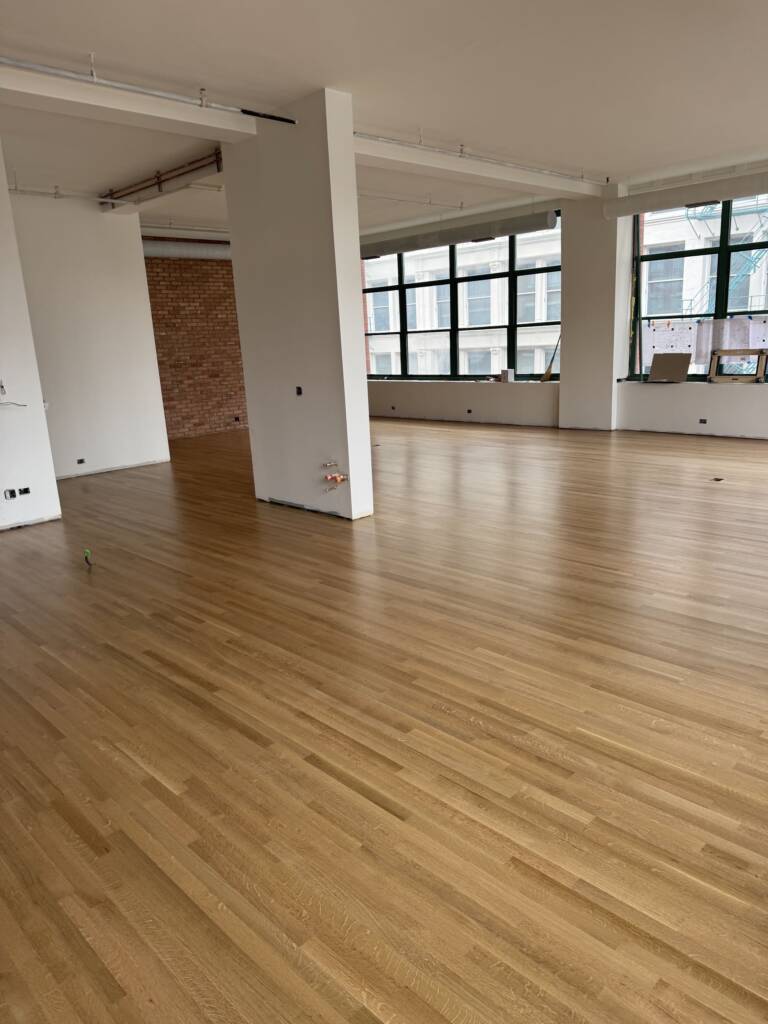
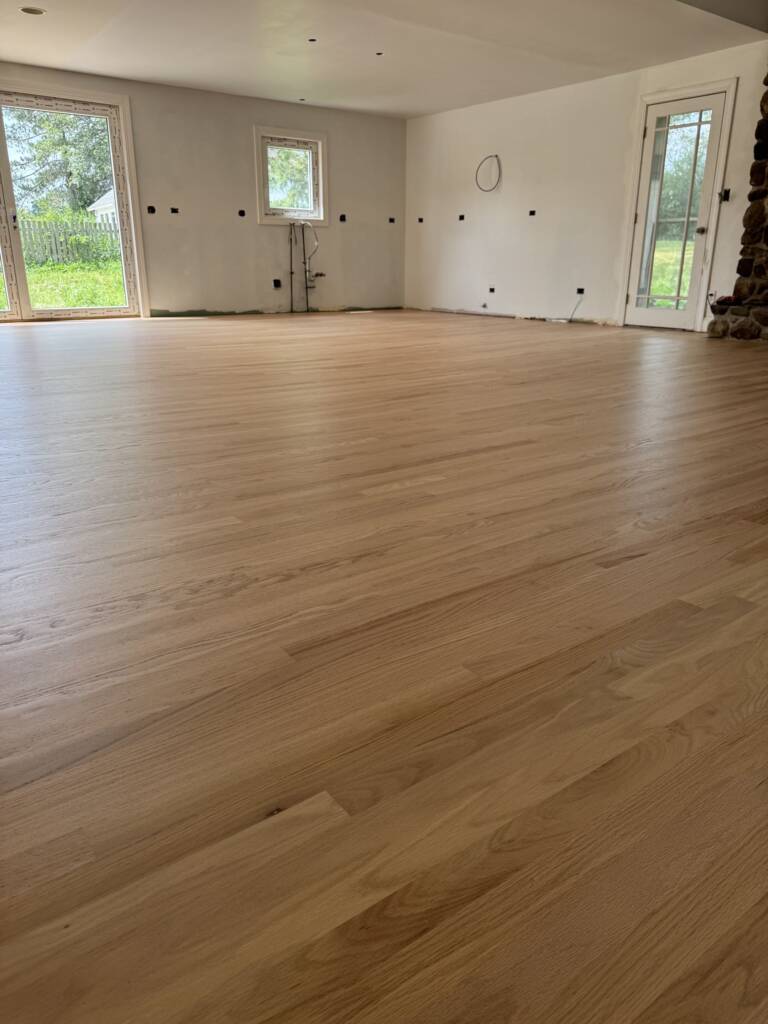
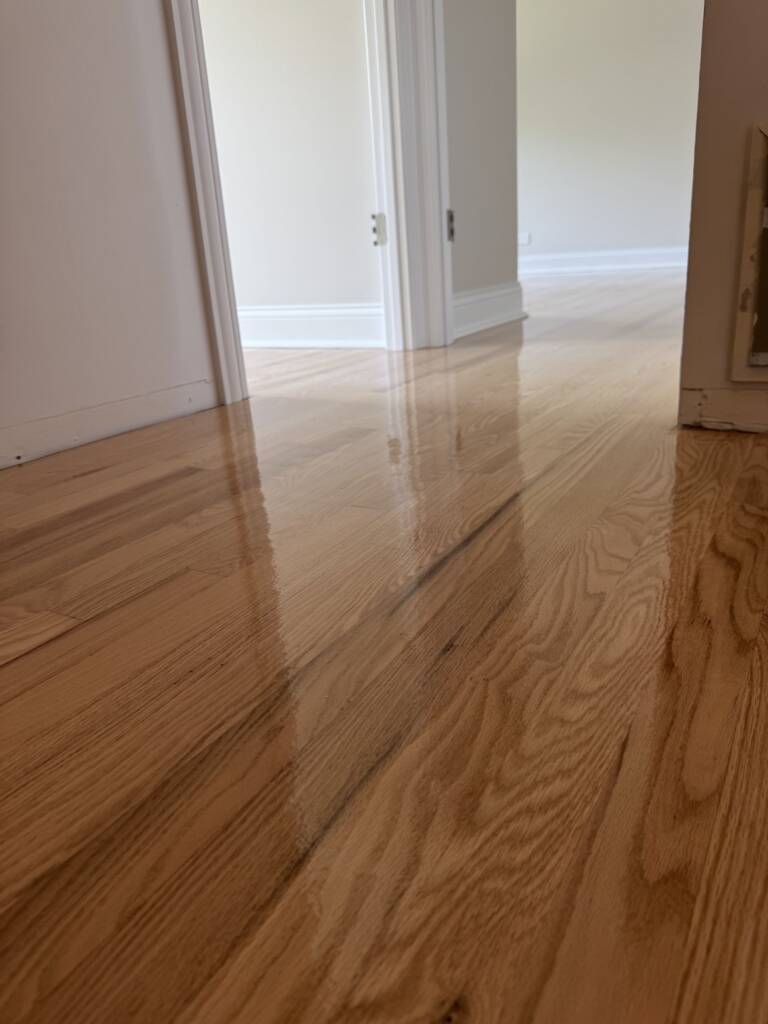
What Is Dustless Sanding and Refinishing
Dustless sanding uses advanced equipment to capture dust at the source. High-powered vacuums connect directly to sanding machines. As a result, airborne particles reduce by up to 99 percent. This process keeps homes cleaner while protecting indoor air quality.
Traditional sanding spreads fine dust throughout the space. Dustless systems eliminate that problem efficiently. Therefore, refinishing becomes safer and more comfortable for occupants.
How Dustless Sanding Works
Specialized sanding machines grind the floor surface evenly. Integrated vacuum systems collect dust instantly. HEPA filtration prevents particles from escaping back into the air. Consequently, surfaces remain clean during every sanding stage.
Multiple sanding passes remove old finishes and surface damage. Each pass smooths the wood further. Precision equipment ensures consistent results across the entire floor.
Key Benefits of Dustless Sanding
Cleaner Indoor Environment
Dustless sanding dramatically improves air quality. Allergens and fine particles stay contained. Families with children or pets benefit greatly. Additionally, furniture and vents remain free from dust buildup.
Faster Cleanup and Turnaround
Minimal dust means faster cleanup after sanding. Floors become ready for staining or sealing sooner. As a result, projects finish on schedule with fewer disruptions.
Superior Finish Quality
Cleaner surfaces allow finishes to bond better. Dust-free conditions reduce imperfections. Consequently, floors achieve a smoother, more durable finish.
When to Choose Dustless Refinishing
Dustless sanding suits many refinishing projects. Floors with scratches, dullness, or minor damage respond well. Older hardwood benefits greatly from this method. However, severely warped or water-damaged floors may require board replacement first.
Consulting a professional helps determine suitability. Proper evaluation ensures realistic expectations and optimal results.
The Dustless Sanding Process Step by Step
Initial Inspection and Preparation
Professionals inspect floor condition and moisture levels. Furniture removal clears the workspace. Doorways and vents receive protective sealing. Preparation ensures efficiency and safety.
Sanding Stages
Coarse sanding removes old finishes and surface flaws. Medium sanding smooths the wood further. Fine sanding prepares the surface for staining. Each stage improves texture and consistency.
Staining and Sealing
Staining enhances color and grain visibility. Sealants protect the wood from wear and moisture. Clean surfaces ensure even stain absorption. Final coats add durability and shine.
Dustless Sanding vs Traditional Sanding
Dustless sanding offers clear advantages over traditional methods. Traditional sanding produces excessive dust and longer cleanup times. In contrast, dustless systems protect health and speed completion.
Although dustless sanding may cost slightly more, benefits outweigh the difference. Reduced mess and improved results justify the investment.
Common Myths About Dustless Sanding
Some believe dustless sanding eliminates all dust completely. In reality, it removes nearly all airborne particles. Minor dust may still appear but remains minimal.
Others assume the process damages floors. Modern equipment uses controlled pressure and precision. Therefore, wood integrity stays intact throughout refinishing.
How to Prepare Your Home for Dustless Refinishing
Clear rooms fully before work begins. Remove wall décor and electronics. Keep pets and occupants away during sanding stages. Ventilation planning ensures optimal airflow.
Communicate clearly with contractors beforehand. Preparation minimizes delays and improves overall results.
Maintenance After Dustless Refinishing
Proper care extends the life of refinished floors. Avoid heavy traffic during curing periods. Use felt pads under furniture legs. Clean regularly using hardwood-safe products.
Maintain stable indoor humidity levels year-round. Consistent conditions protect the new finish and prevent movement.
Cost Factors to Consider
Pricing depends on floor size, condition, and finish type. Additional repairs increase overall cost. However, dustless sanding reduces cleanup expenses and downtime. Many homeowners find the value worthwhile.
Request detailed estimates before starting. Transparency helps avoid unexpected costs later.
Choosing the Right Professional for Dustless Sanding
Experience matters greatly in refinishing projects. Look for contractors using certified dustless systems. Ask about equipment, filtration methods, and warranties. Reviews and references provide additional confidence.
Professional expertise ensures long-lasting results and peace of mind.
Conclusion
Dustless sanding and refinishing offers a cleaner, healthier, and more efficient way to restore hardwood floors. Advanced equipment captures dust while delivering superior finishes. Homeowners enjoy faster completion and lasting beauty. With proper care and professional execution, dustless refinishing protects both floors and indoor environments for years.