Skip to content Skip to footer

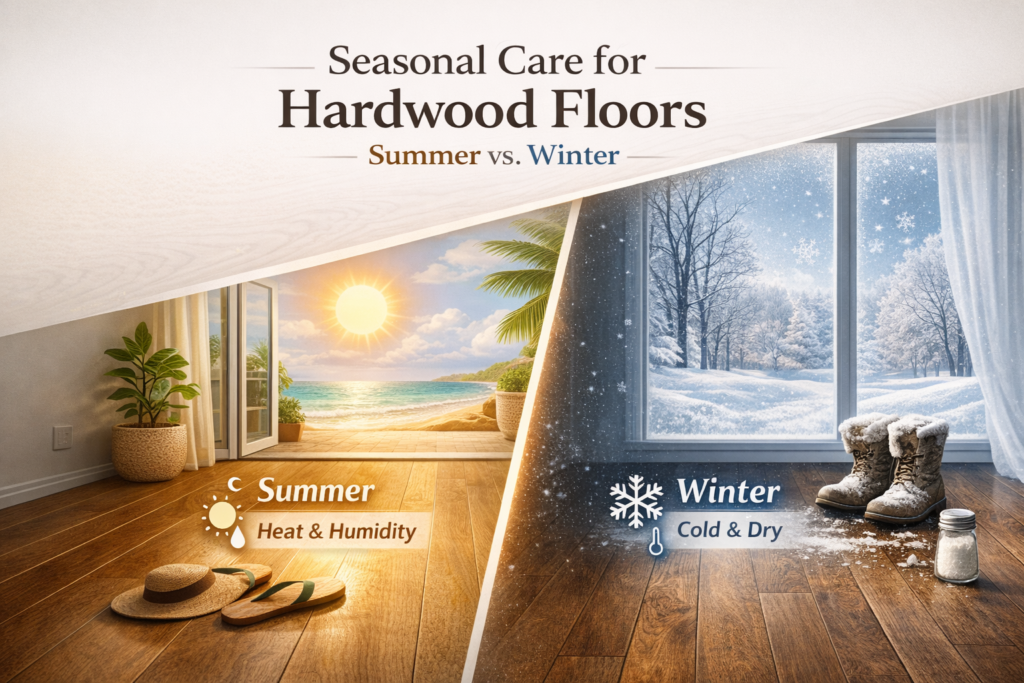
Seasonal Care for Hardwood Floors: Summer vs. Winter

Hardwood floors bring warmth, elegance, and long-term value to any home. However, seasonal changes affect wood more than many homeowners realize. Temperature shifts and humidity swings can cause expansion, contraction, and surface damage. Therefore, understanding seasonal hardwood floor care helps preserve beauty and performance year-round.
Why Seasonal Hardwood Floor Care Matters
Wood is a natural material that reacts to its environment. During summer, high humidity causes boards to expand. In contrast, winter dryness leads to contraction and gaps. Because of these changes, seasonal maintenance prevents warping, cupping, and cracking. Moreover, consistent care extends the lifespan of your hardwood floors.
Summer Hardwood Floor Care Tips
Control Indoor Humidity Levels
Summer humidity poses the biggest threat to hardwood floors. Excess moisture causes boards to swell and press together. As a result, floors may cup or buckle. Use a dehumidifier or air conditioner to maintain indoor humidity between 35% and 55%. Additionally, ceiling fans help circulate air evenly.
Clean Floors More Frequently

Summer brings more foot traffic, dust, and outdoor debris. Sand and grit act like sandpaper on hardwood surfaces. Therefore, sweep or vacuum several times a week. Use a microfiber mop to trap fine particles. Avoid soaking floors, since excess water penetrates wood fibers.

Protect Floors from Sun Exposure
Strong sunlight fades hardwood floors over time. UV rays can discolor certain wood species faster than others. Use curtains, blinds, or UV-protective window films to reduce exposure. Rotating rugs and furniture also ensures even aging across the floor.
Watch for Moisture from Outdoors
Rain, humidity, and pool water increase moisture risks. Place mats near entryways and patios. Encourage guests to remove wet shoes immediately. Wipe spills quickly to prevent moisture absorption. These simple habits prevent long-term surface damage.
Winter Hardwood Floor Care Tips
Maintain Proper Indoor Moisture
Winter heating systems dry indoor air significantly. Low humidity causes boards to shrink, creating visible gaps. Use a whole-house humidifier or portable units to stabilize moisture levels. Maintaining consistent humidity reduces cracking and joint separation.
Avoid Overheating Floors
Excessive heat dries wood too quickly. Set thermostats to moderate temperatures and avoid placing heaters near floors. Radiant heat systems require special attention, since uneven warmth stresses wood fibers. Controlled heating protects floor integrity.
Clean Salt and Snow Residue Promptly
Winter weather introduces salt, ice melt, and slush. These materials damage finishes and stain wood surfaces. Place heavy-duty mats at entrances. Clean residue immediately using a dry or slightly damp cloth. Avoid harsh cleaners that strip protective finishes.
Use Furniture Pads and Area Rugs
Winter encourages heavier furniture use and indoor activity. Felt pads under furniture legs reduce scratches. Area rugs add warmth while protecting high-traffic zones. Choose breathable rug pads to prevent moisture buildup beneath.
Adjusting Cleaning Products by Season
Different seasons require different cleaning approaches. During summer, use quick-drying cleaners to limit moisture exposure. In winter, avoid alcohol-based products that dry wood excessively. Always choose hardwood-specific cleaners to protect finishes. Read labels carefully before application.
Seasonal Inspections and Preventive Maintenance
Inspect hardwood floors at the start of each season. Look for gaps, cupping, or finish wear. Early detection prevents costly repairs. Tighten loose boards and address squeaks promptly. Reapplying protective coatings periodically also strengthens resistance to seasonal stress.
Long-Term Benefits of Seasonal Hardwood Care

Consistent seasonal care improves durability and appearance. Floors remain smooth, stable, and visually appealing throughout the year. Moreover, proper maintenance preserves home value and reduces refinishing frequency. Homeowners enjoy fewer repairs and longer-lasting floors.

Common Seasonal Mistakes to Avoid

Ignoring humidity control ranks among the biggest mistakes. Overwet mopping during summer also causes damage. In winter, neglecting humidifiers accelerates cracking. Additionally, skipping entry mats exposes floors to moisture and debris. Awareness prevents these costly errors.

Conclusion

Seasonal care for hardwood floors requires attention and consistency. Summer demands moisture control and sun protection. Winter requires humidity balance and residue removal. By adjusting care routines seasonally, homeowners protect their investment effectively. As a result, hardwood floors remain beautiful, stable, and durable year after year.
Hardwood Care: Seasonal Tips for Summer and Winter