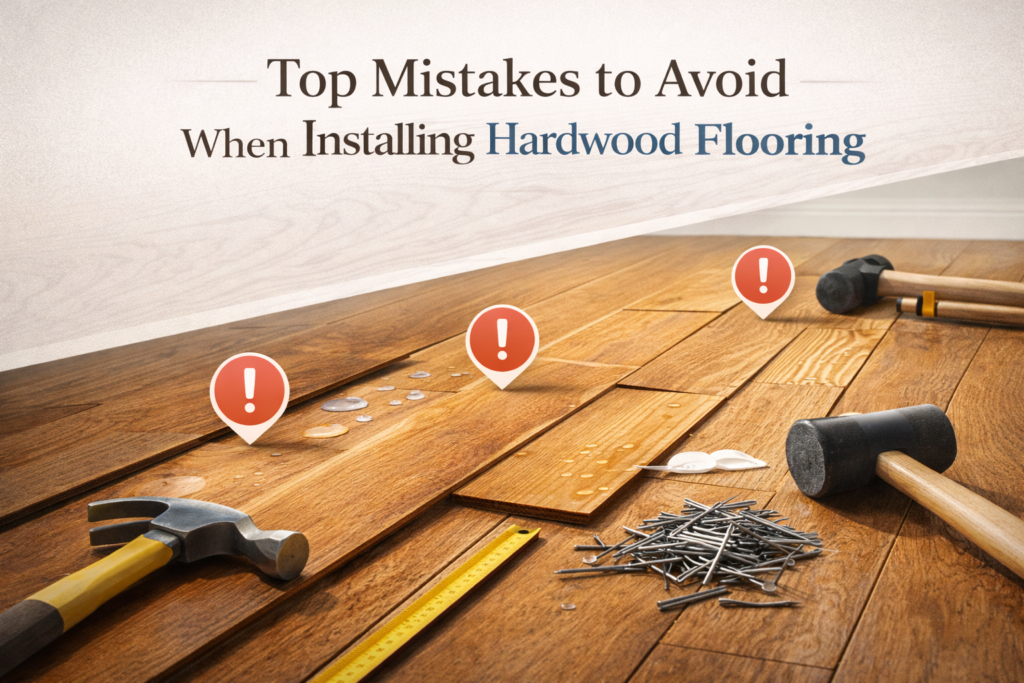
Hardwood flooring enhances comfort, beauty, and long-term home value. However, improper installation can quickly ruin that investment. Many homeowners underestimate preparation, materials, and environmental factors. As a result, avoidable mistakes often lead to warping, gaps, and premature wear. Understanding these errors helps ensure a flawless and durable hardwood floor.
Skipping Proper Acclimation
One of the most common installation mistakes involves ignoring acclimation. Hardwood must adjust to the home’s temperature and humidity before installation. Without acclimation, boards expand or contract after placement. Consequently, floors may buckle or separate. Always allow hardwood to acclimate for several days in the installation space.
Ignoring Subfloor Conditions
A stable subfloor supports long-lasting hardwood floors. Uneven or damaged subfloors cause movement and noise. Moisture trapped below leads to mold and warping. Therefore, inspect subfloors carefully before installation. Level uneven areas and repair damage. Moisture testing ensures safe conditions for hardwood placement.
Failing to Control Moisture Levels
Moisture remains the greatest enemy of hardwood flooring. Installing hardwood over damp surfaces causes swelling and cupping. Excess humidity also affects long-term performance. Use moisture barriers when necessary. Additionally, maintain indoor humidity between 35% and 55%. Proper moisture control prevents costly repairs later.
Choosing the Wrong Type of Hardwood
Not all hardwood flooring suits every environment. Solid hardwood struggles in basements or high-humidity areas. Engineered hardwood performs better in those conditions. Selecting the wrong material leads to instability and damage. Therefore, consider room location, climate, and usage before choosing flooring.
Improper Layout Planning
Poor layout planning results in awkward seams and uneven plank spacing. Starting installation without a clear plan often causes alignment issues. Measure rooms accurately and plan board placement beforehand. Stagger seams properly for visual balance and structural strength. Careful planning improves both appearance and durability.
Neglecting Expansion Gaps
Hardwood flooring expands and contracts naturally. Without expansion gaps, boards press against walls and fixtures. This pressure leads to buckling and cracking. Always leave proper spacing along walls, doorways, and fixed objects. Baseboards and trim later conceal these gaps cleanly.
Using Incorrect Fasteners or Adhesives
Every hardwood type requires specific fasteners or adhesives. Using incorrect materials compromises floor stability. Nails placed improperly cause squeaks and loose boards. Wrong adhesives fail under temperature changes. Follow manufacturer guidelines precisely to ensure secure installation.
Rushing the Installation Process
Speed often leads to mistakes. Rushed installations overlook alignment, fastening, and finish protection. Take time to check each row for straightness and spacing. Precision during installation prevents long-term problems. Quality craftsmanship always outweighs speed.
Installing Without a Moisture Barrier
Moisture barriers protect hardwood from rising dampness. Skipping this step allows moisture to reach wood fibers. Over time, boards swell, cup, or discolor. Install proper underlayment or vapor barriers when required. This step proves especially critical for concrete subfloors.
Overlooking Doorways and Transitions
Doorways and transitions require special attention. Improper transitions create uneven surfaces and tripping hazards. Plan transition strips carefully between rooms and flooring types. Smooth transitions improve safety and aesthetics. Neglecting this step affects both function and appearance.
Using the Wrong Tools
Incorrect tools cause uneven cuts and damaged boards. Dull blades tear wood fibers and ruin edges. Improper nailers damage tongues and grooves. Invest in professional-grade tools or hire experienced installers. Proper tools ensure precision and protect flooring materials.
Not Protecting Floors During Installation
Hardwood floors remain vulnerable during installation. Dropped tools and foot traffic cause scratches and dents. Use protective coverings as work progresses. Clean debris frequently to avoid surface damage. Preventing damage during installation preserves the floor’s original finish.
Skipping Professional Help When Needed
Some installations require professional expertise. Complex layouts, stairs, and large spaces increase risk. DIY attempts without experience often lead to expensive mistakes. Hiring professionals ensures proper techniques and warranties. In many cases, expert installation saves money long-term.
Ignoring Manufacturer Instructions
Manufacturers provide detailed installation guidelines for a reason. Ignoring these instructions voids warranties and increases failure risk. Each product has specific requirements for spacing, fastening, and preparation. Always follow manufacturer recommendations exactly.
Failing to Plan for Long-Term Maintenance
Installation decisions affect future maintenance. Poor layout complicates refinishing. Incorrect finishes limit repair options. Consider long-term care during installation planning. Thoughtful decisions now simplify upkeep later.
Conclusion
Avoiding common hardwood flooring installation mistakes protects your investment. Proper acclimation, moisture control, and careful planning ensure lasting performance. Choosing the right materials and following proven methods prevent costly repairs. With attention to detail and patience, hardwood floors remain beautiful, stable, and durable for decades.